An interview with Dr. Emmanuel Ande Ivorgba
How Women for Zero Hunger Is Helping Women Build Skills, Businesses and Independence in Sierra Leone
4 November 2026
For The Emmanuel Ivorgba Center, empowering women means giving them the skills and opportunities to build a better future for themselves and their families.
Through Women for Zero Hunger, the organisation has expanded its work in Sierra Leone, helping more women learn new skills, start small businesses and become financially independent. From tailoring and catering to the inspiring story of Wandoo, a mother of four who found a new path through sewing, these are stories of determination, resilience and change.
We spoke with Dr. Emmanuel Ande Ivorgba, Founder and President of The Emmanuel Ivorgba Center, about the women whose lives are changing, the progress made so far and his vision for the future.
Women for Zero Hunger is an initiative led by WIA Philanthropy in partnership with Stop Hunger.
Can you briefly tell us where your project is today and what has happened since taking part in Women for Zero Hunger?
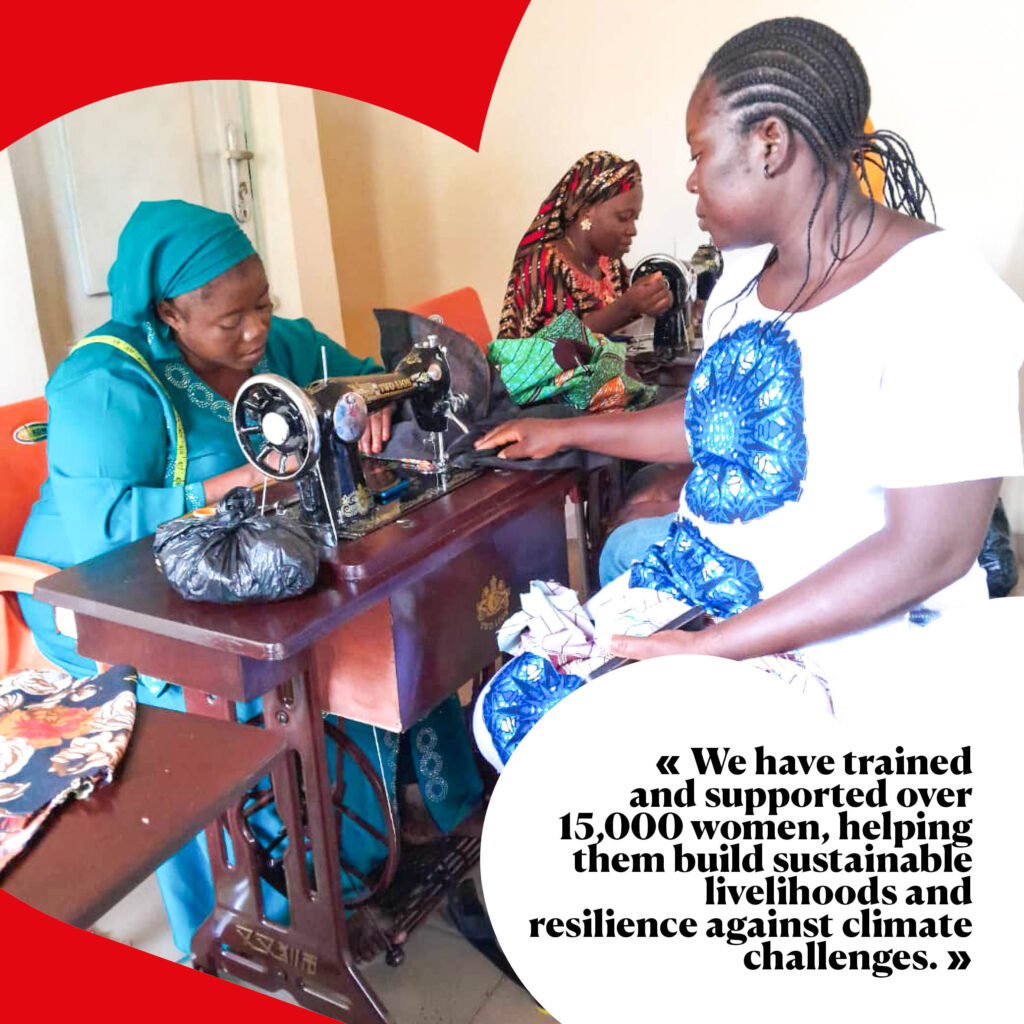
The Emmanuel Ivorgba Center is active in Nigeria, Sierra Leone, and Ghana. We are dedicated to empowering vulnerable and rural women by providing climate-resilient agriculture training, livelihoods skills, and income-generating opportunities. Our goal is to enhance household food security and promote social cohesion within communities. Since 2017, through our Women Economic Empowerment & Livelihood Skills Program and Climate-Smart Agriculture initiatives, we have trained and supported over 15,000 women, helping them build sustainable livelihoods and resilience against climate challenges.
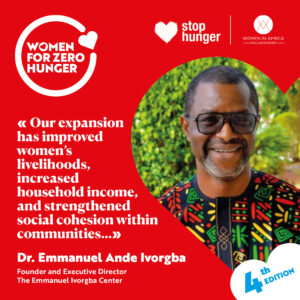
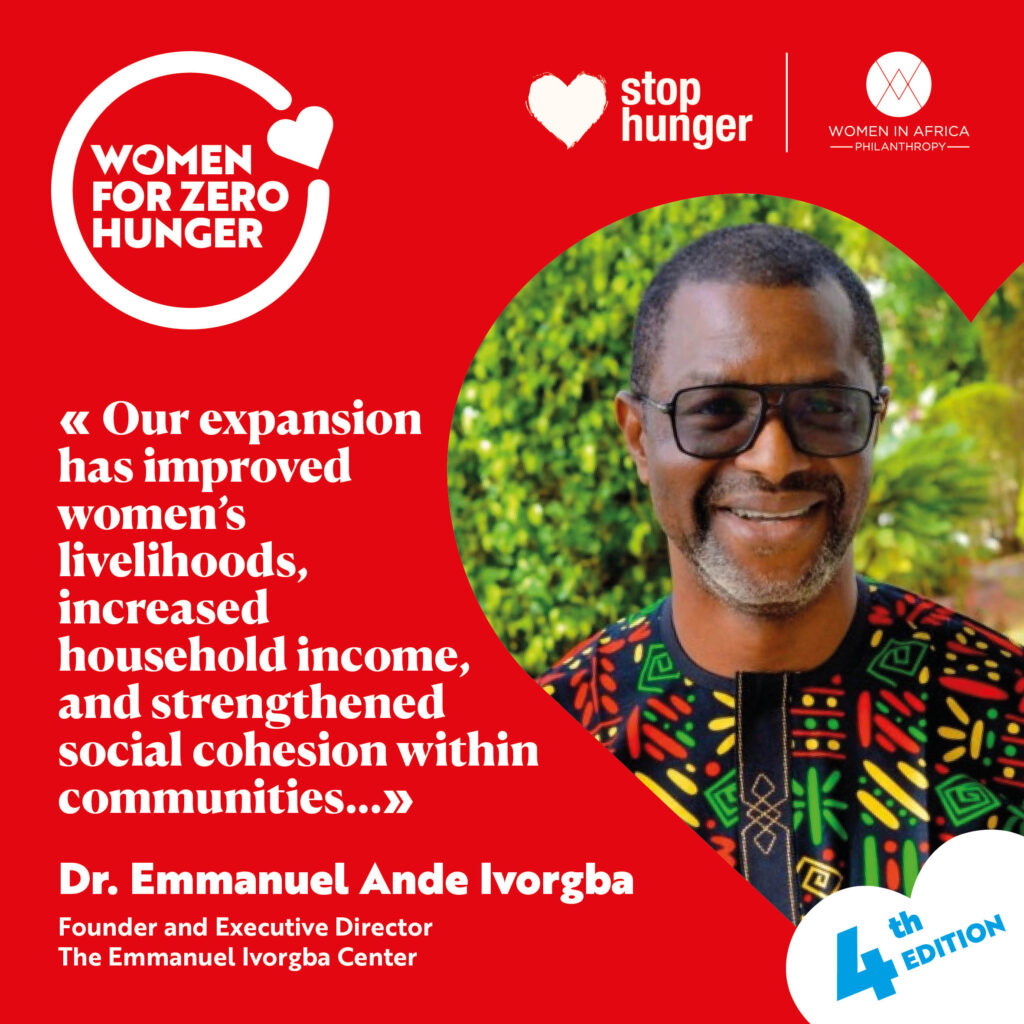
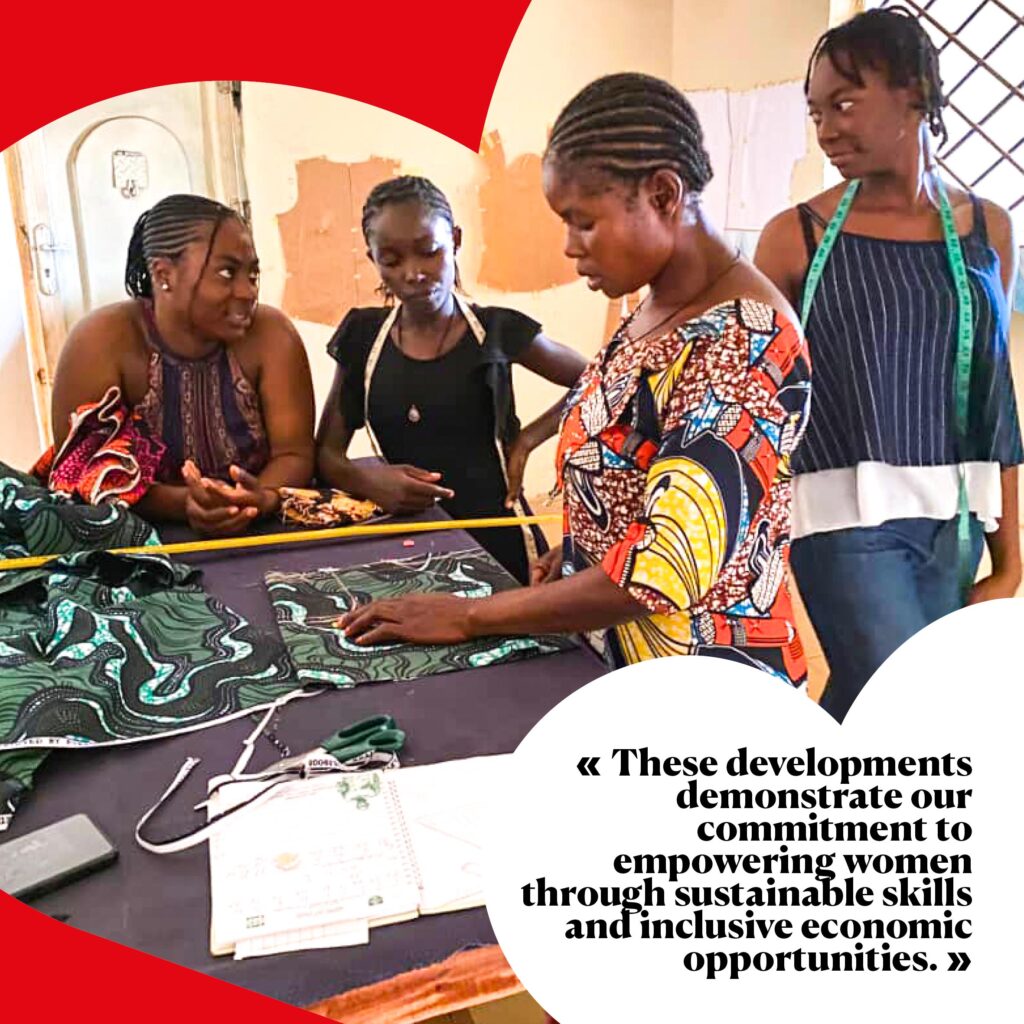
Through the Women for Zero Hunger, our project has made significant progress. For example, in Makeni, Sierra Leone, we expanded to reach more women, purchasing additional sewing machines to boost tailoring and fashion design skills. We secured a larger, more spacious training center that now accommodates 60 women. This space allows us to diversify training, including home management skills such as cakery (birthday and wedding cakes), food catering, and event decoration. Additionally, we introduced Gara tie-dye and arts and crafts, providing women with creative income-generating opportunities. To date, we have trained over 15,000 women across Nigeria, Sierra Leone, and Ghana. Our expansion has improved women’s livelihoods, increased household income, and strengthened social cohesion within communities. These developments demonstrate our commitment to empowering women through sustainable skills and inclusive economic opportunities, aligning with our vision of resilient, food-secure communities.
What has changed for the women you support since the programme began?
Since the program began, women’s lives have significantly improved. Many women now operate successful tailoring businesses, earning an average of about $30 monthly, which helps support their families. Women trained in tailoring, catering and cake-making have started small businesses, catering for local events and earning income to support their families. Socially, women report increased confidence and decision-making power within their households and communities. Several women have formed cooperatives, pooling resources to buy sewing machines and raw materials, which has improved their economic stability. Community-wise, increased household incomes have led to better nutrition, with more families able to afford diverse meals. Women now actively participate in community activities, contributing to local development and social cohesion. These positive changes demonstrate the program’s impact in transforming women’s lives and strengthening community resilience.
What achievement or moment are you most proud of so far?
The achievement I am most proud of is witnessing women’s transformation into confident entrepreneurs. Another proud moment was securing a larger training center, through the Women for Zero Hunger support, that now accommodates 60 women, expanding our impact. Seeing women successfully launch catering businesses for local events, like birthday parties, and producing wedding cakes, has been inspiring. We also facilitated the formation of women’s cooperatives, allowing collective purchasing of raw materials, which increased their income and sustainability. These milestones reflect tangible improvements in women’s economic independence, community participation, and social status. Such moments reaffirm our commitment to empowering women, transforming individual lives, and strengthening entire communities through skills development and economic opportunities.
Can you tell us about “her”?
One of the most inspiring stories from our Women Livelihood Skills Empowerment Program is that of Wandoo Iorshenge, a resilient mother of four who has been widowed for nine years. Since her husband’s death, she has faced the world alone, working tirelessly under the scorching sun to cultivate crops that barely sustain her family. Her harvest is just enough to feed her children, cover their school fees, and afford healthcare. To supplement her income, she also took a job with a local security agency. When The Emmanuel Ivorgba Center introduced the Livelihood Training Program, Wandoo eagerly volunteered, inspired by a colleague who was already benefiting. Initially unsure of what to expect, she was determined to improve her life and that of her children. Learning to operate a sewing machine, take measurements, and stitch fabric was daunting, but she persisted. Through practice, she mastered sewing seams and rhythmically operated the foot pedal. Her greatest achievement was sewing shirts for her children with love and precision. Today, Wandoo stands tall as a proud tailor, reclaiming her independence and dignity, one stitch at a time.
What are you working on now, and what comes next for the project?
Currently, we are focused on training and expanding women’s access to skills training by establishing additional training centers in underserved areas. We are also developing mentorship programs to support women in scaling their small businesses and improving financial literacy. Additionally, we are working to strengthen women’s cooperatives by facilitating access to microloans and markets, enabling them to increase production and sales. Our team is also monitoring and evaluating the program’s impact to ensure sustainability and identify areas for improvement. Looking ahead, the next phase involves scaling the project, replicating successful models in new communities. We plan to introduce digital tools for marketing and business management, helping women reach broader markets. Our goal is to empower more women economically, fostering community resilience and social change. We aim to create a self-sustaining ecosystem where women continue to thrive independently and contribute meaningfully to their communities.
What has being part of Women for Zero Hunger meant for your organisation and the women you work with?
Being part of Women for Zero Hunger has profoundly transformed our organisation and the women we serve. It has amplified our impact, enabling us to reach more women with vital skills, resources, and support. This partnership has provided access to funding, training, and networks, empowering women to become entrepreneurs, farmers, and community leaders. For the women, it means increased food security, economic independence, and improved livelihoods. Many have started small businesses, like selling produce or crafts, which now sustain their families. The collaboration has also fostered a sense of solidarity and collective action among women, encouraging leadership and advocacy. Overall, Women for Zero Hunger has strengthened our capacity to promote sustainable change, helping women break the cycle of hunger and poverty. It’s a shared journey toward empowerment, resilience, and lasting community development, inspiring hope and tangible progress for women and their families.
Get in Touch!
Latest in the WIA Community
Don’t miss the latest news. Find out what’s happening at WIA.