WIA Philanthropy Spotlight: Sarah Msambira 2025 Young Leader
DISCOVER THE NEW WIA YOUNG LEADERS 2025
25 November 2025
We’re thrilled to continue our spotlight series with Sarah Msambira, a trailblazing horticulturalist and youth mentor from Malawi whose work is redefining the future of agriculture and sustainable community development across Africa.
Sarah, could you tell us briefly who you are and what you do?
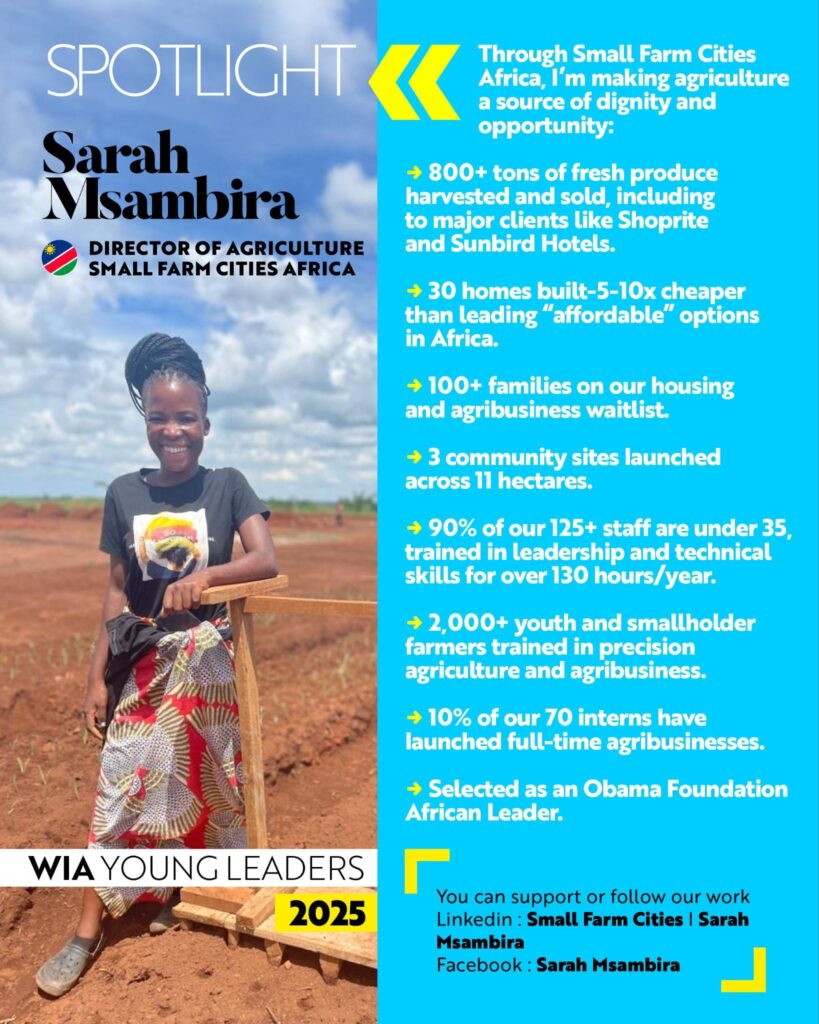
I’m Sarah Msambira, Director of Agriculture at Small Farm Cities Africa, an organization building affordable, sustainable rural communities across Malawi. Over the years, I’ve produced and sold over 800 metric tons of vegetables, led a team of more than 60 staff, and trained over 2,000 students and farmers in precision agriculture.
Beyond farming, I’m passionate about creating opportunities for young people — I’ve mentored over 70 interns, 10% of whom have since launched their own agribusinesses. My work centers on transforming agriculture into a source of dignity, profitability, and empowerment for rural families.
What inspired you to start this journey?
Growing up in a small farming community in Salima, I saw firsthand how limited access to resources and markets kept many hardworking families trapped in cycles of struggle. While studying agriculture, I realized how disconnected classroom theories were from real-world challenges.
That realization sparked my mission to bridge the gap — combining agriculture, business, and leadership training to help smallholder farmers move from survival to sustainability. Today, our model at Small Farm Cities Africa integrates regenerative agriculture, housing, and agribusiness development, helping rural families not only farm better but also live better.
What keeps me going is seeing families who once struggled now earning stable incomes, educating their children, and dreaming bigger.
What achievements or milestones are you most proud of?
Through Small Farm Cities Africa, I’ve had the privilege of building a model that transforms rural livelihoods:
– 800+ metric tons of fresh produce harvested and sold to major clients like Shoprite and Sunbird Hotels.
– 30 affordable homes built for families — 5–10x cheaper than conventional options.
– 3 community sites launched with integrated infrastructure across 11 hectares.
– 90% of our 125+ staff are youth under 35, each receiving over 130 hours of annual leadership and technical training.
– 2,000+ youth and farmers trained in precision agriculture and agribusiness.
– 70+ interns mentored, with 10% now running their own agribusinesses.
Being selected as an Obama Foundation African Leader remains one of my proudest honors, but what brings me the most joy is witnessing the ripple effect — seeing the young people I once mentored now leading teams, empowering others, and driving change in their communities
Can you share one belief or quote that guides your journey?
“When you invest in people, you help turn potential into possibility — and that possibility can grow into transformation for entire communities.”
This belief shapes everything I do. Sustainable development begins with investing in people — their skills, their dreams, and their capacity to lead change.
What advice would you give to young women who want to create impact?
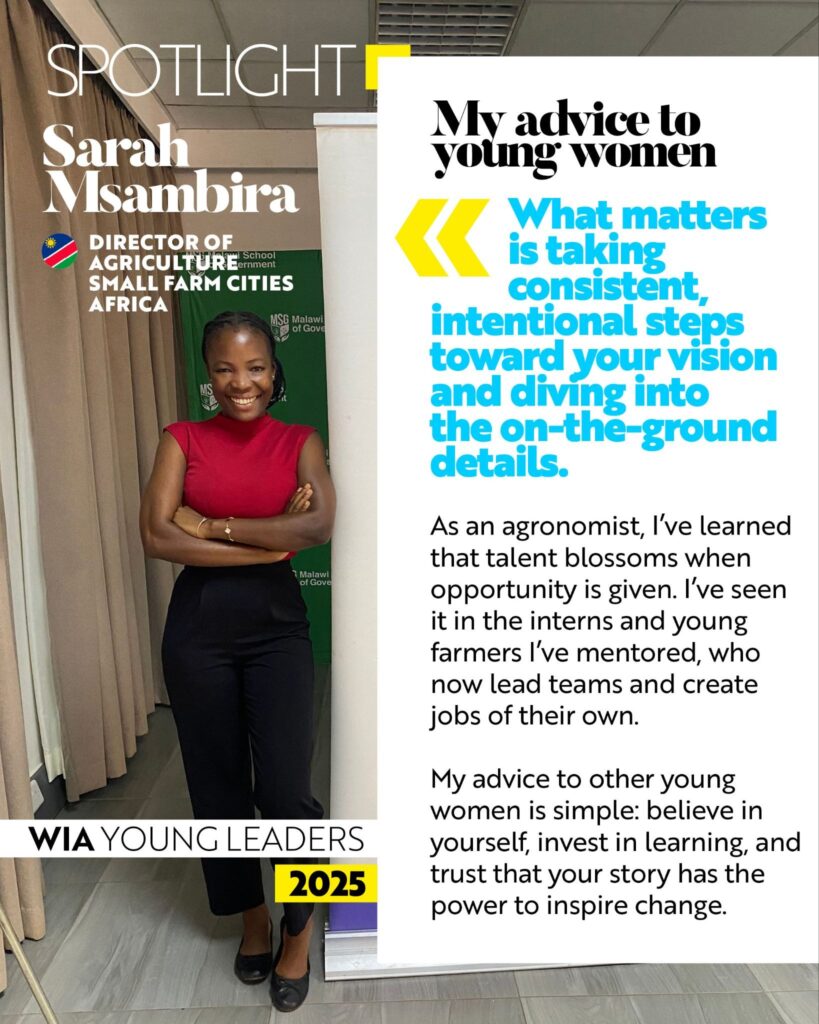
Start small, but start now. You don’t need to have everything figured out before you begin. What matters is taking consistent, intentional steps toward your vision and staying close to the communities you want to serve.
As an agronomist, I’ve seen how talent blossoms when opportunity is given. Surround yourself with people who believe in your potential and never underestimate the power of persistence. Believe in yourself, invest in learning, and remember — your story can inspire change for others.
What’s next for you and Small Farm Cities Africa?
We’re scaling our impact across Malawi and East Africa, expanding our green, affordable community model that blends agriculture, housing, and renewable energy.
Our next phase focuses on empowering more youth and women to lead Africa’s transition to climate-smart, regenerative agriculture, helping families live sustainably while contributing to national food security and economic growth.
Latest in the WIA Community
Don’t miss the latest news. Find out what’s happening at WIA.