WIA Philanthropy Spotlight: Chinenye Esther Eruchie 2026 Young Leader
DISCOVER THE NEW WIA YOUNG LEADERS 2026
23 October 2026
We are delighted to continue our 2026 Spotlight Series by celebrating you, Esther!
Can you tell us briefly who you are and what you do?
My name is Chinenye Esther Eruchie, a researcher, entrepreneur and the Founder and CEO of FriendnPal, an AI-powered behavioural-health platform making mental healthcare more accessible, proactive, and personalized. We combine artificial intelligence, behavioural monitoring, and licensed professional care to help identify signs of distress earlier and connect people to appropriate support in over 50 languages.
My work sits at the intersection of mental health, technology, and health systems innovation, with a mission to ensure that access to care does not depend on where someone lives or the resources they have.
What inspired you to start your journey or project?
My journey is deeply personal. Losing my mother to depression and experiencing the challenges of living with ADHD opened my eyes to how devastating mental health struggles can be, especially when support is inaccessible or stigma prevents people from seeking help. These experiences showed me how devastating it can be when people cannot access the care they need, when they need it most. I founded FriendnPal to help change that reality. I believe mental healthcare should not begin only when someone reaches a breaking point. By combining technology with human compassion and professional care, we can recognize distress earlier and create more opportunities for timely intervention.
What are the key achievements or milestones you’re most proud of?
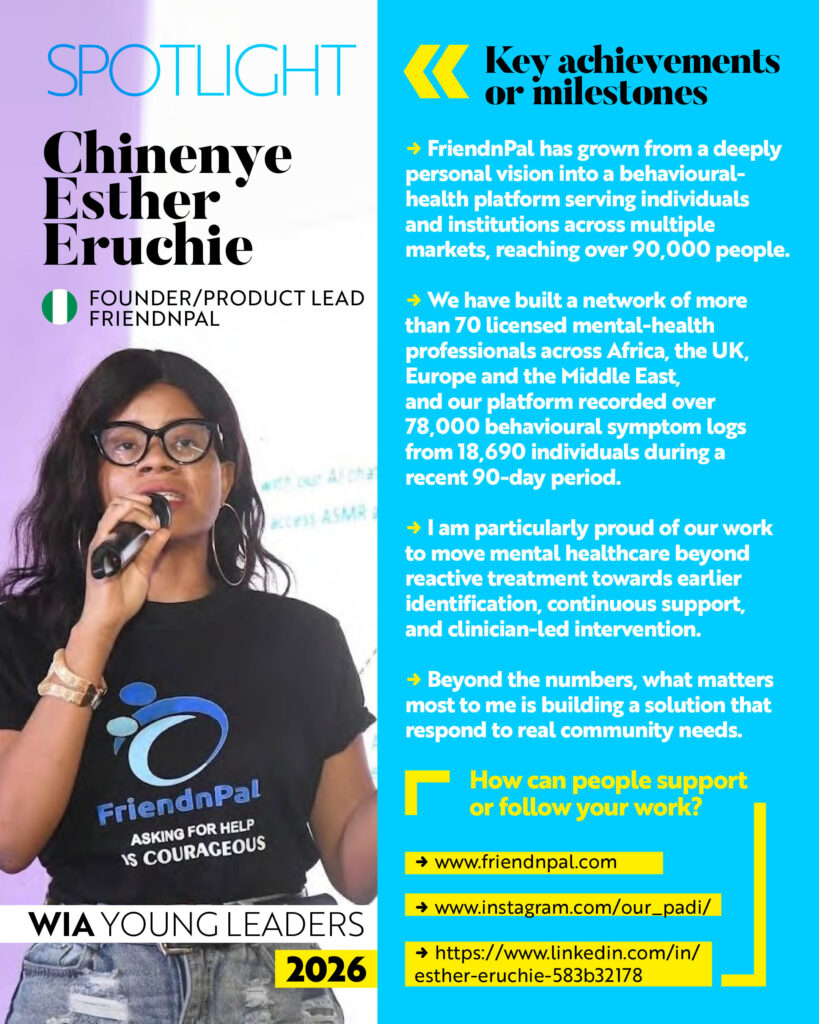
I am proud that FriendnPal has grown from a deeply personal vision into a behavioural-health platform serving individuals and institutions across multiple markets, reaching over 90,000 people. We have built a network of more than 70 licensed mental-health professionals across Africa, the UK, Europe and the Middle East, and our platform recorded over 78,000 behavioural symptom logs from 18,690 individuals during a recent 90-day period. I am particularly proud of our work to move mental healthcare beyond reactive treatment towards earlier identification, continuous support, and clinician-led intervention.
Beyond the numbers, what matters most to me is building a solution that respond to real community needs.
Can you share with us one personal quote or belief that guides you?
“Your pain does not have to be the end of your story; it can become the beginning of someone else’s hope.”
I believe that our most difficult experiences can deepen our empathy and inspire us to create meaningful change. We may not be able to change everything we have been through, but we can help shape what happens next for someone else.
What advice would you give to other young women who want to create impact?
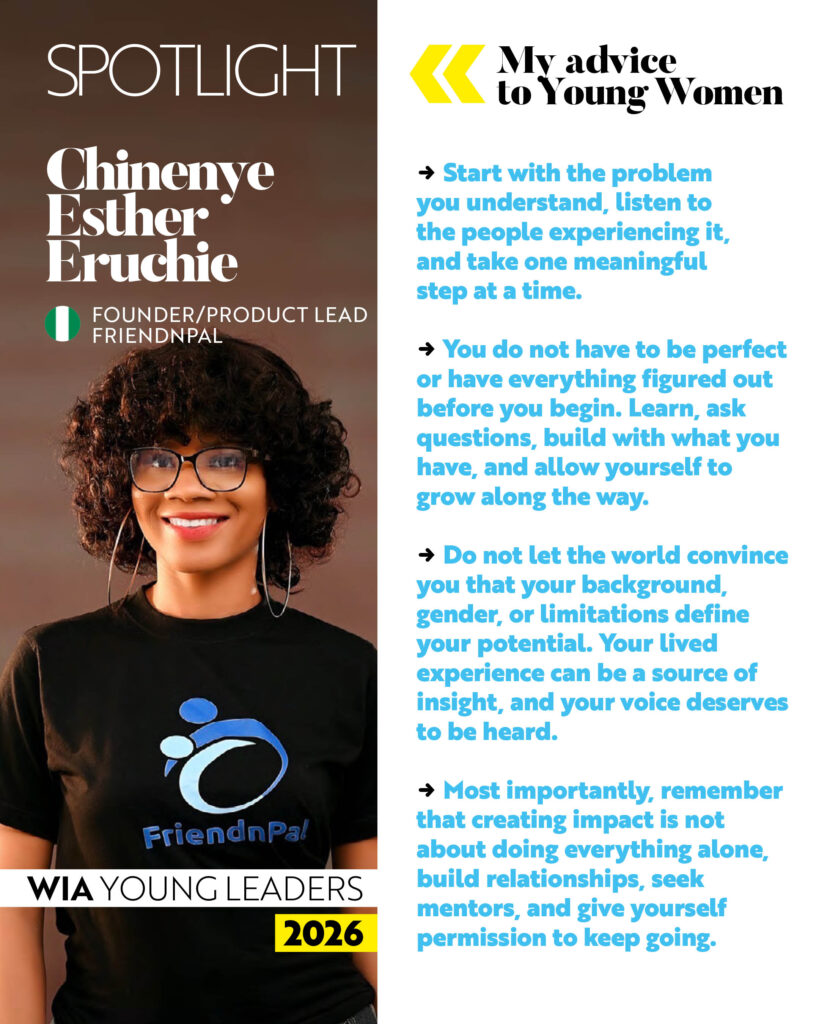
Start with the problem you understand, listen to the people experiencing it, and take one meaningful step at a time. You do not have to be perfect or have everything figured out before you begin. Learn, ask questions, build with what you have, and allow yourself to grow along the way. Do not let the world convince you that your background, gender, or limitations define your potential. Your lived experience can be a source of insight, and your voice deserves to be heard.
Most importantly, remember that creating impact is not about doing everything alone, build relationships, seek mentors, and give yourself permission to keep going.
What are you currently working on or planning next?
We are strengthening FriendnPal’s predictive behavioural-health capabilities through ongoing clinical validation, with a focus on longitudinal symptom monitoring, risk stratification, and earlier identification of potential deterioration. Through my current research and innovation work in Rwanda, I am exploring how these approaches can be adapted to different African health systems and local contexts.
We are also strengthening our technology, expanding international partnerships especially Europe and Middle East, and exploring collaborations with healthcare providers, researchers, and institutions, to integrate proactive mental-health support into existing care systems. My broader vision is to help build a future where mental health care is not only reactive but predictive, accessible, and inclusive, regardless of someone’s language, location, or income.